

How Does an Isolating Switch Work?
1. What is an Isolating Switch?
An isolating switch (also known as an isolator or disconnecting switch) is a high-voltage electrical component designed to provide a reliable, visible disconnection point in a power system. Its core function is to safely isolate a section of equipment—such as a transformer, capacitor bank, or cable—from the live power grid for maintenance, inspection, or circuit switching. Unlike circuit breakers, isolating switches cannot interrupt load current or fault currents (e.g., short-circuit currents). They must be operated only after the circuit has been de-energized or the current has been cut off by a circuit breaker. This makes them essential for creating a safe working environment in high-voltage applications, including renewable energy power stations, substations, and industrial plants.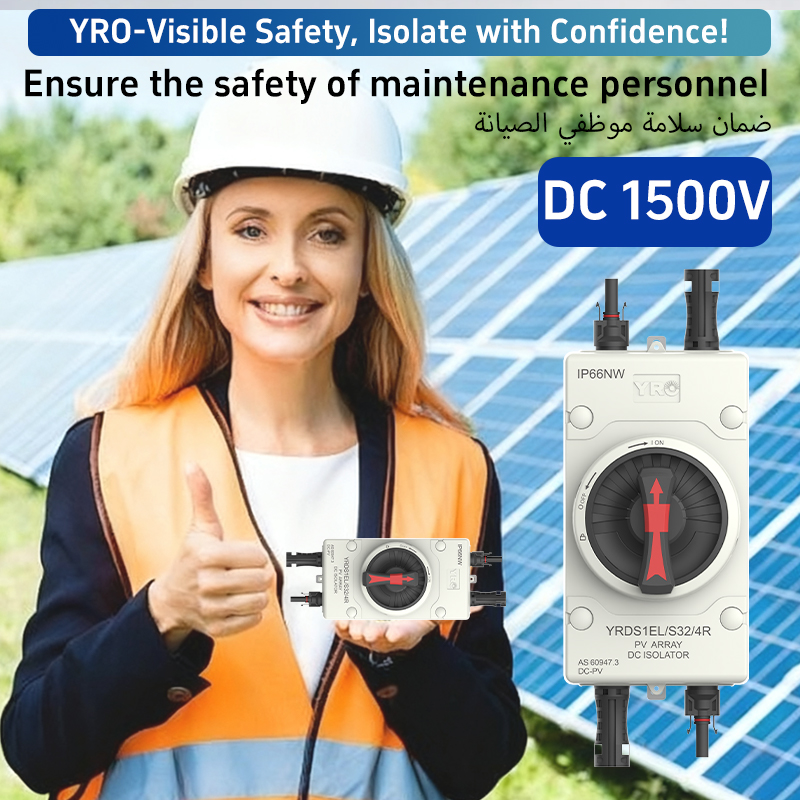
2. What Does an Isolator Switch Do?
Isolating switches serve multiple critical roles in electrical systems, particularly in enhancing safety and operational flexibility:
· Secure Isolation: The primary function is to physically and visibly separate equipment from energized parts of the grid, ensuring a safe zone for maintenance personnel. The visible air gap confirms the circuit is de-energized.
· Circuit Conversion: In distribution systems, isolators can switch between different power supply branches or connect/disconnect backup equipment, helping to maintain power continuity.
· Carrying No-Load Currents: They can temporarily carry small no-load currents, such as transformer magnetizing currents or cable charging currents, but are not designed to interrupt these currents.
· Grounding Protection: Many high-voltage isolators can be equipped with grounding blades to safely discharge residual voltage in isolated sections, adding an extra layer of safety during maintenance.
In renewable energy systems—like photovoltaic (PV) farms or wind power stations—isolating switches are installed at generator busbars and transformer inputs to safely isolate the generation system during repairs without impacting the main grid.
3. How Does an Isolating Switch Work?
The operation of an isolating switch is based on mechanical movement to create or remove a physical air gap between contacts. Here’s a step-by-step breakdown:
1. Pre-Operation Check: Before operating the isolator, it is essential to confirm that the associated circuit breaker is open and the circuit is in a no-load state. Many modern isolators feature interlocking devices that prevent operation if the circuit breaker is closed, avoiding dangerous misoperations.
2. Contact Movement: Through manual (e.g., handle, lever) or motor-driven mechanisms, the moving contact (often a knife-blade design in high-voltage types) is driven to separate from or engage with the stationary contact.
· Opening: The moving contact retracts, creating a visible air gap that provides electrical insulation.
·Closing: The contacts come into firm mechanical and electrical contact, ensuring low-resistance current flow.
3. Isolation and Insulation: Once fully open, the air gap between contacts serves as the main insulation barrier, preventing any electrical energy from reaching the isolated equipment. High-quality isolators, such as those designed for outdoor use, optimize this gap and use robust insulation materials to maintain performance even in harsh environments (e.g., humidity, dust, temperature extremes).This “off-load” operation—meaning it only acts after current flow has stopped—distinguishes isolators from “on-load” devices like circuit breakers.
4. The Advantages of Having an Isolator Switch
Integrating isolating switches into electrical systems, especially in renewable energy applications, offers significant benefits:
· Enhanced Safety: The visible disconnection gap provides clear, physical proof that a circuit is de-energized, protecting maintenance crews from accidental electrocution.
· System Reliability: By allowing safe isolation of faulty or maintenance-needing sections, isolators help minimize downtime and enable quicker repairs without shutting down the entire system.
· Operational Flexibility: They facilitate circuit reconfiguration and supply switching, which is valuable in complex grids like those integrating solar, wind, and backup power sources.
· Durability and Low Maintenance: Designed with simple, robust mechanics (no arc-extinguishing systems), high-quality isolators have long service lives—often up to 30 years—with minimal maintenance needs (e.g., periodic contact inspection).
· Compliance and Risk Reduction: Using isolators helps meet electrical safety regulations and standards, reducing risks of fire, equipment damage, and operational hazards.For renewable energy projects, these advantages translate into safer operations, reduced maintenance costs, and improved overall system uptime.
5. Summary
Isolating switches are indispensable safety components in high-voltage power systems, including renewable energy installations. First, they provide a reliable, visible break to isolate equipment for safe maintenance. Second, they operate only under no-load conditions, requiring coordination with circuit breakers. Third, their simple mechanical action—creating an insulating air gap—ensures durable and fail-safe performance. Finally, the benefits span from enhanced personnel safety and operational flexibility to long-term reliability and regulatory compliance.
When selecting an isolating switch for your solar, wind, or other energy project, consider key factors like voltage/current ratings, installation environment (indoor/outdoor), operation mode (manual/electric), and safety features (interlocks, grounding blades). Choosing a reputable supplier with certified products ensures optimal protection and performance for your electrical system.
For expert guidance on isolating switch solutions tailored to renewable energy applications, contact our technical support team or explore our product portfolio.