

What’s the One Component Your Electrical System Is Probably Missing?
In the world of electrical systems—from industrial plants to modern smart homes and burgeoning new energy installations—safety and reliability are non-negotiable. While circuit breakers and fuses often get the spotlight, there's one fundamental, often overlooked component that forms the bedrock of operational safety: the disconnector for home use (also known as a Disconnector or Isolator).
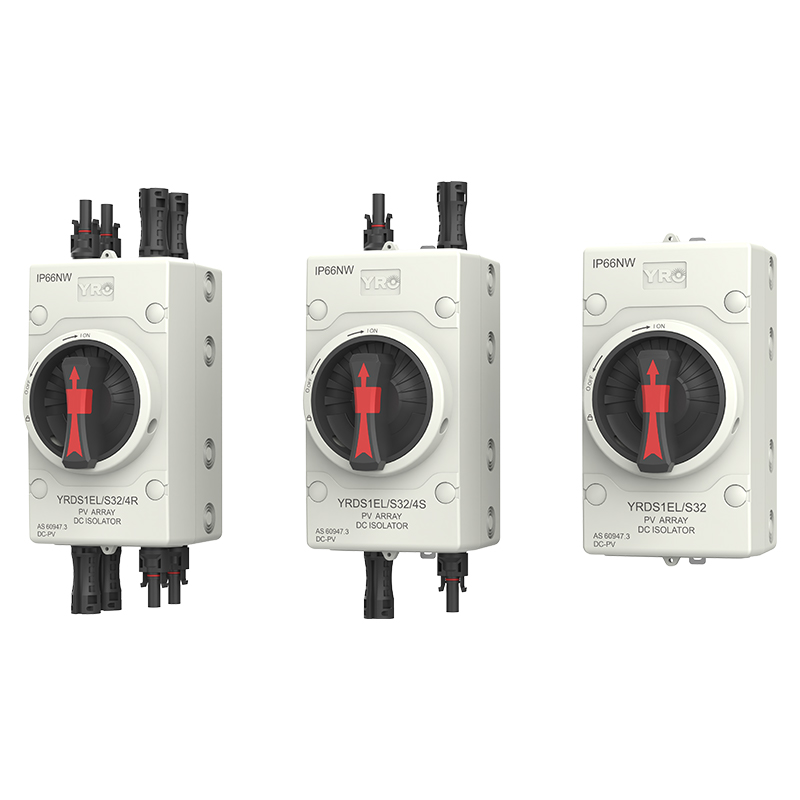
1. The Undeniable Importance of Isolating Switches
An isolating switch is a manually operated device designed for one core purpose: to safely disconnect a circuit from its power source. Unlike circuit breakers that automatically trip during faults, isolators provide a deliberate, "positive" break for human safety.
Their importance is multi-faceted:
· Visible Safety: When opened, these devices create a clearly visible break in the circuit, providing direct confirmation that it is de-energized. This visual assurance is critical for personnel conducting maintenance, repairs, or installations, as it effectively prevents accidental electric shock.
· System Protection: They enable the isolation of specific system sections while keeping the rest of the operation running. This capability supports efficient troubleshooting, minimizes operational downtime, and helps safeguard other equipment from localized faults.
· Regulatory Compliance: Most electrical safety standards and codes (like the NEC) mandate the use of isolating switches in various applications, particularly for high-power equipment and in commercial/industrial settings.
· Emergency Control: They serve as a first-response point to quickly de-energize a circuit during an emergency, fire, or other hazardous situations, helping to prevent escalation.
In new energy systems, such as solar installations, to ensure operational and maintenance safety, the DC side of the PV system must be equipped with a safety system that includes overcurrent protection devices (e.g., fuses) and isolating switches. Among these, DC isolating switches are specifically used to manually disconnect the circuit when necessary, achieving electrical isolation.
2. Potential Hazards of Operating Without Proper Isolation
Choosing to forgo or incorrectly specify an isolating switch invites a host of preventable risks:
· Maintenance Hazards: Working on live equipment is a primary cause of electrical accidents. Without a reliable isolating switch, personnel cannot confirm whether a circuit is fully de-energized, exposing them to serious or even fatal injury.
· Fire Risk from Overheating: Poor internal contact in a switch—often caused by wear, corrosion, or load mismatch—can lead to severe overheating. This accelerates insulation aging, melts components, and can ultimately ignite a fire.
· Unexpected Arcing & Flashover: Poor internal contact in a switch—often caused by wear, corrosion, or load mismatch—can lead to severe overheating. This accelerates insulation aging, melts components, and can ultimately ignite a fire.
· Regarding flashovers: The risk of electrical flashover is more pronounced in photovoltaic DC systems. Unlike AC power, DC does not have a current zero-crossing point that automatically extinguishes arcs. Once a DC arc is ignited, it tends to persist. In the event of a DC electrical fire, the flames spread rapidly and burn for an extended duration, resulting in more severe damage to the photovoltaic array and associated electrical equipment.
· System Damage from Faults: Failure to safely isolate a faulty branch can allow localized system issues—such as a short circuit in a PV string—to spread, damaging high-value downstream components like inverters and controllers.
· Operational Failure: Switches may fail due to mechanical issues such as jamming, refusal to open or close, or incomplete operation. In an emergency, if a switch "fails to open," the system remains energized and in a hazardous state.
3. Do I Need an isolator switch for home use for Home Use?
This is a common question for homeowners. The answer is nuanced: while not mandatory for every single circuit in a residence, they are strongly recommended and often required for specific, high-power applications.
· For Major Appliances: Building codes typically require a local isolating switch for heavy-duty equipment like air conditioning units, electric water heaters, pool pumps, and heat pumps. This allows for safe servicing without needing to cut power to the entire house.
· For Safety & Convenience: Installing an isolator switch for home use for a major circuit adds a layer of safety and control. It allows you to quickly disconnect power during an emergency or before any DIY electrical work.
· For New Energy Home Systems: If your home has a solar panel system, a DC disconnector for home use is a critical and non-negotiable safety component on the roof or near the inverter to isolate the DC power from the panels.
· Choosing the Right One: For home use, consider load capacity (match it to your appliance), weather resistance (for outdoor units like for A/C or solar), and ease of access. Always consult a qualified electrician for selection and installation to ensure compliance with local regulations.
Summary
An isolator is not just a component; it is the embodiment of fundamental safety procedures.. Its role in ensuring safe maintenance, preventing accidents, protecting equipment, and complying with standards cannot be overstated—especially in the context of modern and new energy systems where DC voltages and complex installations are common.
Investing in a high-quality, correctly rated isolating switch, and having it professionally installed, is not an expense; it's an investment in long-term system reliability, personnel safety, and peace of mind. Don't let this critical link be the one your system is missing.
Looking for reliable, application-specific isolating switches for your residential, commercial, or new energy project? Explore our range of robust DC and AC isolators designed for safety, durability, and compliance.