

How to Choose Fuse Electrical Components for Solar and Energy Storage Projects?
Fuses protect circuits and equipment from overcurrent conditions that can lead to damage, fires, or other hazards. In solar photovoltaic (PV) and energy storage systems, proper fuse selection is even more critical. These systems generate and store high-voltage direct current (DC) power . This article explains how to choose the right fuse components for solar and energy storage projects. The products covered are Fuse Electrical miniature fuses and knife-blade fuses.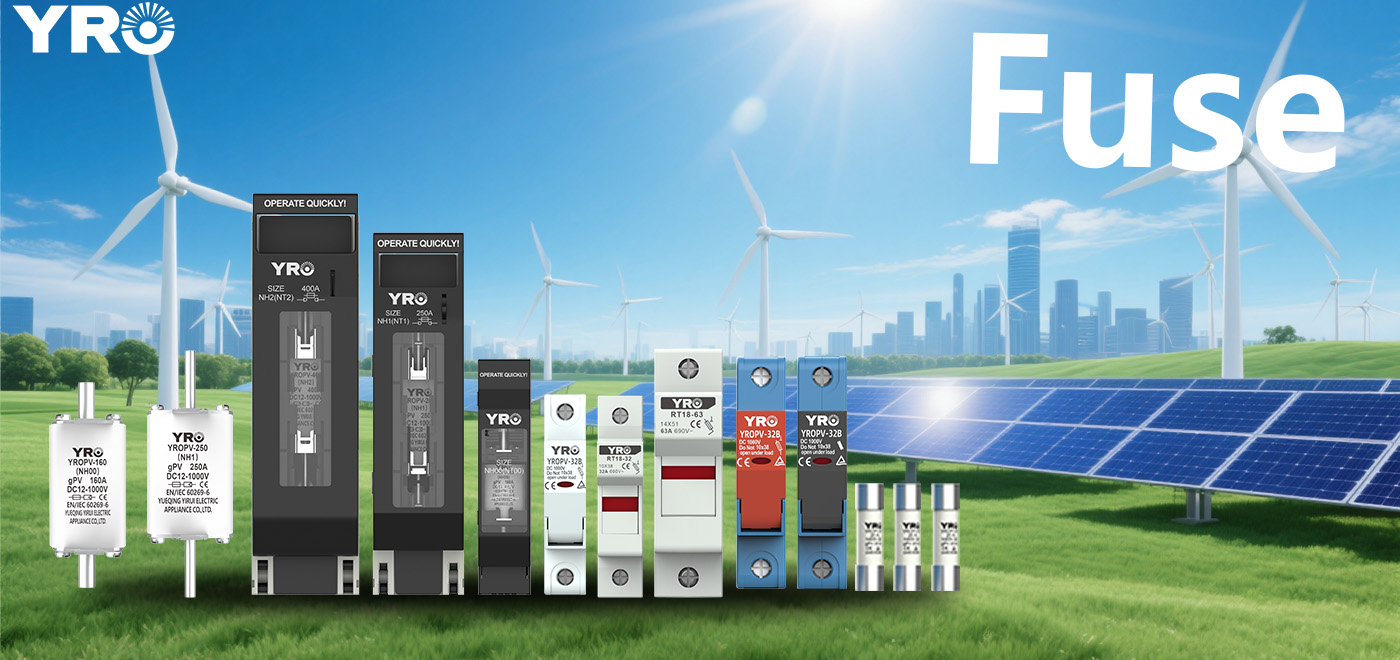
1. Importance of Proper Fuse Electrical Selection
Fuses play an essential role in protecting electrical circuits from overcurrent conditions. They ensure the safety and reliability of electrical systems . In PV systems, fuses provide integral protection against overcurrents that could otherwise damage valuable PV equipment. Using an incorrect fuse can be extremely hazardous
Selecting the correct fuse is a safety imperative. An improper fuse may either blow too quickly, disrupting the system’s operation, or fail to blow when needed, leading to catastrophic damage .
AC vs. DC: A Critical Difference
One of the most important distinctions in fuse selection for solar and energy storage projects is the difference between AC and DC systems. AC naturally crosses zero during every cycle, making arc interruption easier . DC does not naturally cross zero, so interrupting DC arcs is much more difficult .
Common DC system voltages include 250VDC, 750VDC, 1000VDC, 1500VDC, and 1800VDC . Modern PV systems increasingly use 1500VDC and 1800VDC high-voltage architectures . Because of the difficulty of DC arc interruption, DC fuses require a stronger arc extinguishing capability. AC fuses should not be used in high-voltage DC systems . PV and battery systems require dedicated DC-rated fuses .
A common mistake is to use a fuse rated for 600 VAC on a DC disconnect rated for 600 VDC. The cable size and the current rating may seem correct. However, the voltage rating is even more important than the current rating in some circumstances. AC-rated fuses should not be used in DC voltage circuits unless the fuse manufacturer provides DC application ratings.
2. Understanding Fuse Types
Different fuse types are designed to meet the unique electrical, thermal, and mechanical demands of specific applications . For solar and energy storage projects, Fuse Electrical offers miniature fuses and knife-blade fuses.
Miniature Fuses (Micro Fuses)
Miniature fuses, also known as micro fuses, are compact overcurrent protection devices designed for space-constrained electronic assemblies. They are governed by the IEC 60127 standard for miniature fuses in global applications . Selecting a fuse with the appropriate certifications ensures it meets industry-recognized performance criteria. It supports regulatory approvals for end products and reduces the risk of field failures .
Miniature fuses are available in glass and ceramic tube versions. Glass fuses provide clear visual indication of fuse status, making diagnostics and maintenance straightforward. However, they are limited to lower interrupting ratings . Ceramic fuses offer enhanced arc containment, higher interrupting capacity, and improved thermal resilience, making them suitable for more demanding applications . Current range for glass and ceramic tube fuses: 40 mA ~ 30 A. Mounting: through-hole or clip .
Miniature fuses are commonly used in control electronics, solar monitoring systems, communication equipment, and instrumentation within solar and energy storage systems .
Knife-Blade Fuses (Industrial Fuses)
Knife-blade fuses are robust industrial fuses designed for high-current applications. They feature blade-style contacts that insert into matching fuse holders or fuse bases. This design provides secure electrical connections and easy replacement in industrial settings.
These industrial fuses follow standardized construction sizes. D01 and D02 are standardized construction sizes commonly used in industrial and residential applications. D01 is rated up to 16 A and is suitable for small control circuits and low-power devices. D02 is rated up to 63 A and is designed for larger motors, high power cables, and power lines.
The utilization category of a fuse defines its intended application and performance characteristics. The gG utilization category refers to general-purpose fuses that provide full-range protection. This means they can interrupt any overcurrent, from small overloads to high short-circuit currents. gG fuses are commonly used for cable and line protection in various electrical systems.
Color codes in industrial fuses quickly identify key specifications such as operational class, rated voltage, and current rating. This system helps prevent errors during fuse replacement. For example, in Siemens 400V fuses, different colors indicate different current ratings: a 6A fuse might be green, while a 25A fuse could be yellow. The color codes vary among manufacturers, so always refer to the specific datasheets for accurate information.
3. How Do You Pick the Right Fuse Electrical Components for Solar and Energy Storage Projects?
Step 1: Define Application Requirements
Identify the application type. Is it a solar PV system, a battery energy storage system, or a hybrid system? Understand the load behavior, operating conditions, and criticality of the system .
Step 2: Determine Voltage Rating (AC or DC)
The first step is to determine whether the system uses AC or DC voltage. The fuse’s voltage rating must be equal to or greater than the system voltage. This prevents arcing and ensures safe interruption under fault conditions . For solar and energy storage systems, common DC voltages include 1000VDC, 1500VDC, and 1800VDC . AC-rated fuses must not be used in high-voltage DC systems unless the manufacturer provides DC application ratings.
For a 230V AC system, select a fuse with a voltage rating of 230V or higher, such as 250V, to ensure safety.
Step 3: Determine Current Rating
Calculate the system’s normal steady-state current. Use the basic electrical power formula: I = P / U . Add a safety margin (typically 125–150%) to account for startup inrush or transient surges .
For PV systems, the most common calculation method is to multiply a branch’s continuous load current by 1.25 and use the closest rated fuse that is greater than the result An alternative formula is: Rated current = Actual operating current / 0.75.
Choose a fuse with a rated current slightly above the system’s operating conditions, but below the capacity of the wires or devices to ensure safe and reliable operation.
Step 4: Select an Appropriate Interrupting Rating
Identify the maximum available fault current. Battery systems can release enormous fault current within milliseconds . Choose a fuse whose interrupting rating exceeds this value. This ensures safe disconnection under short-circuit conditions . The interrupting rating is the current that a fuse can interrupt without being destroyed or causing an electric arc of unacceptable duration If the available short-circuit current exceeds the fuse’s breaking capacity, the fuse may explode or create an arc flash hazard .
Step 5: Define Response Time Requirements
Decide whether fast-acting or time-delay response is needed. Fast-acting fuses are for sensitive electronics without inrush. Time-delay (slow-blow) fuses are for loads like motors, transformers, or capacitive input supplies . Many solar inverters have DC bus capacitors that create high charging inrush currents during startup, requiring time-delay fuses .
Step 6: Consider I²t Performance
I²t represents the thermal energy allowed to pass through the fuse during fault interruption. Lower I²t values provide better protection for sensitive equipment . The I²t value of the fuse must be higher than the calculated I²t value for the application. The I²t value represents the amount of thermal energy needed to melt the wire or fuse element. It can be calculated using the formula: I²t (Application) = 0.5 × Ip² × τ.
Step 7: Assess Environmental Conditions
Analyze external conditions like ambient temperature, humidity, dust, vibration, mechanical shock, and operating altitude. Confirm the fuse is rated for environmental durability under expected stresses. Apply thermal derating if applicable .
Fuse current ratings are measured at 23°C. Since a fuse is rarely operated at this temperature, derating of the rated current is usually necessary. The higher the ambient temperature, the quicker the fuse will blow, so a higher amperage is necessary.
Higher ambient temperatures reduce the fuse element’s current-carrying capability because it operates closer to its melting point . This is especially important in outdoor PV systems, compact switchgear, high-temperature industrial cabinets, and energy storage containers .
Step 8: Determine Mechanical and Mounting Requirements
Select an appropriate package and mounting style based on space limitations, thermal management needs, and mechanical security. Consider whether field-serviceability is important .
For miniature fuses, glass and ceramic tube versions use through-hole or clip mounting . For field-serviceable equipment, a cartridge fuse is much easier to replace than one that is soldered down .
For knife-blade fuses, ensure the selected fuse fits the system’s existing fuse holder or base. Consider the physical dimensions and the electrical specifications.
Step 9: Consider Fuse Category and Utilization Category
Select the correct fuse category for the application. For general-purpose distribution protection in solar and energy storage systems, use gG fuses that provide full-range protection against overload and short-circuit currents .
Step 10: Confirm Compliance and Certification
Verify whether the application demands compliance with specific standards. Key standards include UL 248 for low-voltage fuses in North America, IEC 60127 for miniature fuses in global applications, and AEC-Q200 for automotive-grade fuses operating in harsh environments . Selecting a fuse with the appropriate certifications ensures it meets industry-recognized performance criteria and supports regulatory approvals for end products .
Step 11: Validate Final Selection
Perform a final review under worst-case operating conditions. For example, consider the highest fault current and lowest ambient cooling. Ensure the fuse will reliably protect the system in all expected real-world scenarios .
Example Selection
Consider protecting a general-purpose circuit in an industrial setting with the following specifications: Operating current: 30A. System voltage: 230V AC. Application type: General-purpose protection.
1. Determine the construction size: Since the operating current is 30A, a D02 construction size is suitable because it can handle up to 63A.
2. Calculate the rated current: Rated current = 30A / 0.75 = 40A. Choose a fuse with a rated current slightly above 40A, such as 50A.
3. Check the voltage rating: For a 230V AC system, select a fuse with a voltage rating of 230V or higher, such as 250V.
4. Consider the utilization category: Use a gG utilization category fuse for general-purpose applications.
5. Verify color codes: Check the color code to ensure it matches the current rating. Color codes vary among manufacturers, so always refer to the manufacturer’s documentation for accurate color coding.
6. Ensure compatibility: Verify that the selected fuse fits the system’s existing fuse holder or base.
Common Mistakes to Avoid
1. Selecting a fuse current rating too high — An oversized fuse may not protect cables and equipment under overload conditions .
2. Using AC fuses in DC systems — DC fault interruption is much more difficult than AC interruption. Incorrect fuse selection can create severe safety risks .
3. Ignoring startup current — Motor and transformer startup current can easily cause nuisance fuse operation .
4. Ignoring fault current levels — The fuse breaking capacity must always exceed the available short-circuit current .
5. Ignoring temperature derating — High temperatures can significantly reduce fuse carrying capability .
6. Replacing a fuse with a larger one — This is generally unsafe because the circuit may no longer be properly protected .
4. Summary
Selecting the right fuse electrical components is a critical step in solar and energy storage project design. Fuses protect circuits and equipment from overcurrent conditions that can lead to damage, fires, or other hazards.
A reliable fuse selection process must consider system voltage, operating current, startup characteristics, fault current level, breaking capacity, fuse category, I²t performance, and ambient temperature . Proper fuse coordination helps prevent equipment damage, improve electrical safety, and increase long-term system reliability .
As renewable energy systems, energy storage infrastructure, and EV charging stations continue expanding, correct fuse selection is becoming increasingly important in modern electrical engineering .
yro is committed to providing reliable fuse components, including miniature fuses and knife-blade industrial fuses (D01 and D02 construction sizes). These products meet international standards such as UL 248 and IEC 60127.
For optimal performance, always consult local regulations, refer to manufacturer datasheets, and work with certified components from reputable manufacturers. Choosing the right fuse safeguards devices and systems. It prevents costly damage and ensures reliable operation in solar and energy storage projects worldwide.