
Do You Know the Benefits and Features of Solar Optimizers?
1. What Are Solar Panel Optimisers?
A solar panel optimizer, also known as a power optimizer, is a DC/DC converter connected to each individual solar panel in a photovoltaic (PV) system. It transforms standard panels into "smart modules" by enabling independent monitoring and optimization of each panel's performance. Unlike traditional string inverters, which treat all panels in a series as a single unit, optimizers allow each panel to operate at its maximum potential, regardless of variations caused by shading, dust, panel orientation, or mismatched wattages. This technology is particularly valuable for residential and commercial installations where environmental factors or complex roof layouts might otherwise reduce overall energy yield.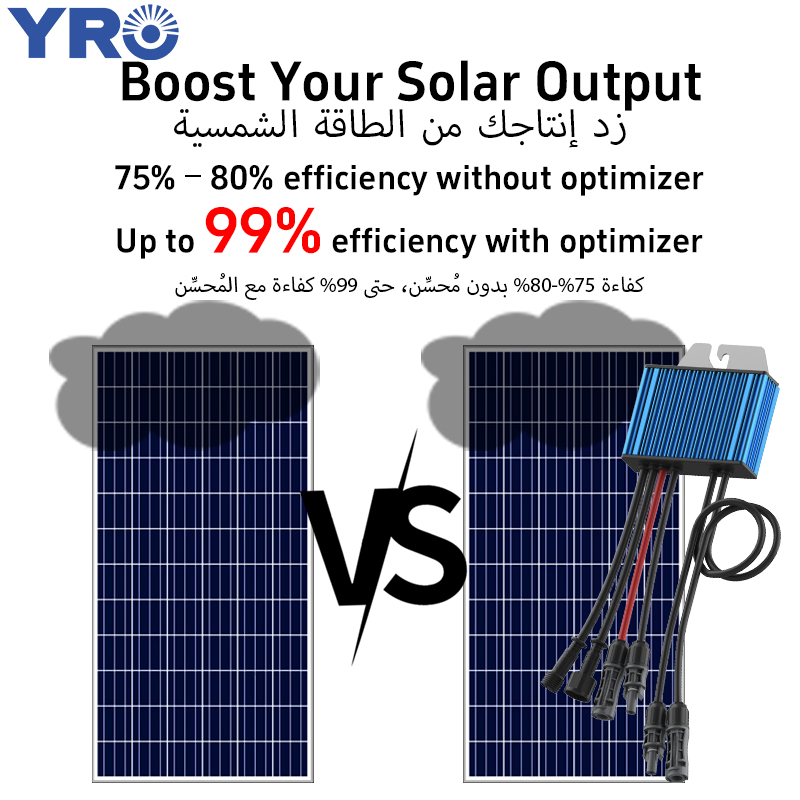
2. How Do Solar Panel Optimisers Work?
Solar optimizers work by decoupling each panel's output and adjusting it in real-time to maximize power harvest. Here’s a step-by-step breakdown:
· Individual Maximum Power Point Tracking (MPPT): Each optimizer performs MPPT at the panel level. This means it continuously finds and maintains the optimal voltage and current for that specific panel, even if neighboring panels are underperforming due to shade or soiling.
· DC/DC Conversion: The optimizer converts the panel's variable DC output to a stable, optimized DC voltage that is sent to the central inverter. This ensures that the weakest panel in a string does not drag down the performance of the entire array.
· Communication and Monitoring: Most optimizers are equipped with communication capabilities, allowing system owners and installers to monitor the real-time performance of each panel via a dedicated app or platform. This enables early detection of issues like panel failures, shading problems, or debris accumulation.
· Safety Features: Advanced optimizers, such as those from SolarEdge, include safety functions like SafeDC™, which automatically reduces the high DC voltage from the panels to a safe level when the inverter is switched off or during maintenance, enhancing electrical safety.
In essence, optimizers act as intelligent intermediaries between the solar panels and the inverter, ensuring every panel contributes its maximum possible energy.
3. What Are the Benefits of Using Solar Panel Optimisers?
Integrating power optimizers into a solar PV system offers multiple compelling advantages:
· Increased Energy Production: By mitigating the "weakest link" effect in traditional strings, optimizers can significantly boost overall system yield—especially in installations with partial shading, multiple roof planes, or panels at different angles. This translates to higher revenue and a shorter payback period.
· Enhanced Safety: Optimizers reduce high DC string voltages to safe levels during shutdowns or emergencies, protecting installers and firefighters from electrical hazards.
· Detailed Monitoring and Diagnostics: Panel-level monitoring allows for precise fault detection (e.g., underperforming panels, shading issues), enabling proactive maintenance and minimizing downtime.
· Design Flexibility: They facilitate the use of panels with different wattages or technologies within the same array and are ideal for complex installations where uniform conditions cannot be guaranteed.
· Long-Term Reliability: Most optimizers come with extended warranties (typically 10–25 years), reflecting their durability and long service life.
· Compatibility: Leading brands like SolarEdge, Huawei, and Tigo offer optimizers compatible with various inverters and panel types, though some (like Huawei) may require their own inverters for full functionality.
It's important to note that optimizers add to the initial system cost. Therefore, their benefits are most pronounced in scenarios where shading, orientation challenges, or soiling are present. For simple, unshaded roofs with uniform panels, the gains may be marginal.
4. Summary
Solar panel optimizers are transformative devices that elevate the efficiency, safety, and intelligence of photovoltaic systems. First, they are DC/DC converters that enable panel-level optimization, turning standard arrays into smart, independent power sources. Second, they work by performing individual MPPT, converting DC output, and providing real-time monitoring and safety shutdowns. Third, the key benefits include substantially higher energy harvest, enhanced electrical safety, detailed performance insights, and greater installation flexibility.
When considering solar optimizers, evaluate your specific site conditions—such as shading, roof complexity, and panel variety—against the additional investment. For installations where environmental factors limit performance, optimizers can be a wise investment that pays off through increased energy production and peace of mind. As solar technology advances, optimizers continue to play a crucial role in maximizing the return on solar investments and ensuring safe, reliable operation for decades.
To explore optimizer solutions tailored to your project or to learn more about compatible products from leading brands, contact our technical team or visit our product catalog.
Previous:Qingming Festival